
Tile Installation in St. Charles, IL
Our home base. We know this town's housing stock well — from the brick bungalows near the Fox to the newer builds east of Randall Road.
St. Charles sits on both banks of the Fox River, and the housing stock reflects that history. The neighborhoods west of the river — closer to downtown and the historic district — tend to have older homes, some dating back to the early 1900s, with wood subfloors, plaster walls, and proportions that call for careful tile selection. East of the river, particularly past Randall Road, newer subdivisions built in the 1990s and 2000s have concrete slab foundations, which changes the prep approach considerably.
We've worked in both zones regularly. Whether it's a 1920s bungalow near the riverfront that needs a careful substrate build-up before bathroom tile can go in, or a newer Dunham Farms home getting a kitchen backsplash update, the approach starts the same way: look at what's there before deciding what to do next.
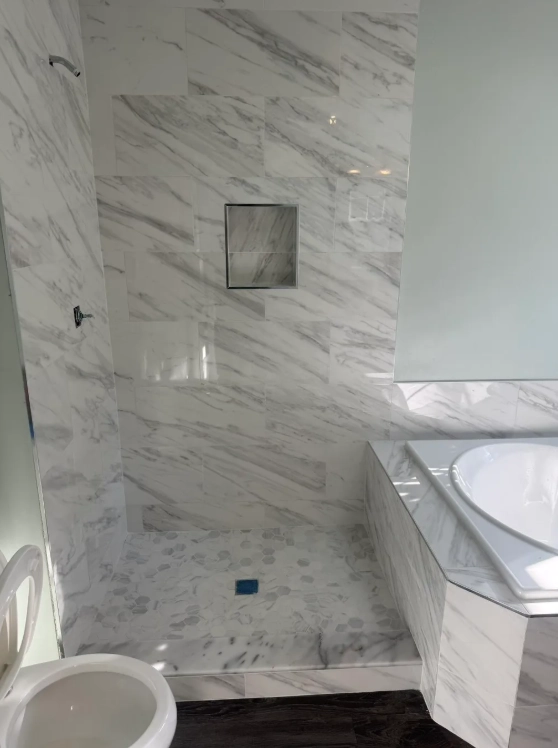
What Makes St. Charles Homes Different
- Older homes near the historic district often have lath-and-plaster walls — we check for stability before tiling directly over them
- Wood subfloors common west of the Fox require deflection checks and often a cement board layer before floor tile
- Newer slab-on-grade homes east of Randall Road need moisture vapor testing before setting large-format porcelain
- IL winters create thermal cycling — expansion joints at perimeter walls are especially important in unheated spaces like mudrooms and garages

St. Charles Tile FAQ
Do older homes near downtown St. Charles need special prep before tiling?
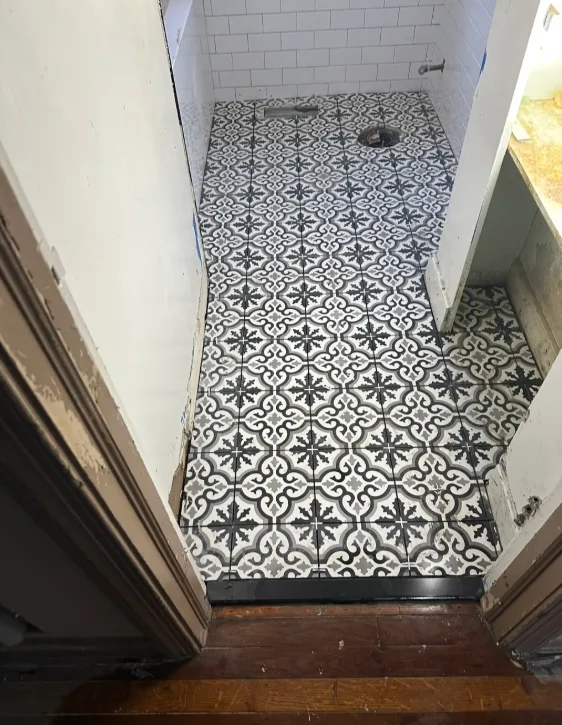
Often, yes. Homes in the historic district and near the Fox River corridor tend to have wood framing and subfloors rather than concrete slabs. Before setting floor tile in these homes, we check for subfloor deflection — too much flex will crack grout and eventually loosen tiles. We also look at what's on the walls in wet areas, since some older homes still have original plaster or early drywall that isn't appropriate to tile directly over without adding cement board.
Is a permit required for bathroom tile work in St. Charles?
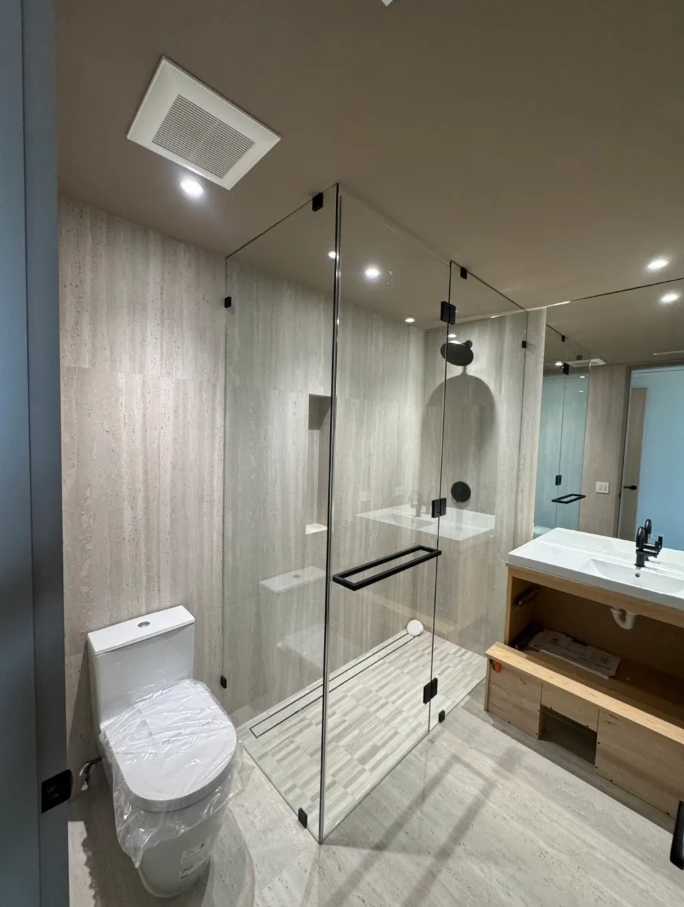
For tile replacement within an existing footprint — removing old tile and replacing it with new — a permit is generally not required in St. Charles. If the project involves moving plumbing fixtures, changing the shower pan drain location, or structural modifications, that changes the picture. We recommend confirming with the City of St. Charles building department for any project that goes beyond a straight tile swap.
How does Illinois weather affect tile installations in unheated spaces?
The freeze-thaw cycle is a real factor for tile in mudrooms, three-season rooms, garages, and exterior-adjacent spaces. Grout and tile expand and contract with temperature changes. Without proper expansion joints at perimeter walls and at any change in plane, that movement has nowhere to go and eventually cracks the grout — or the tile. We use flexible caulk at all perimeter transitions in spaces that experience significant temperature swings.
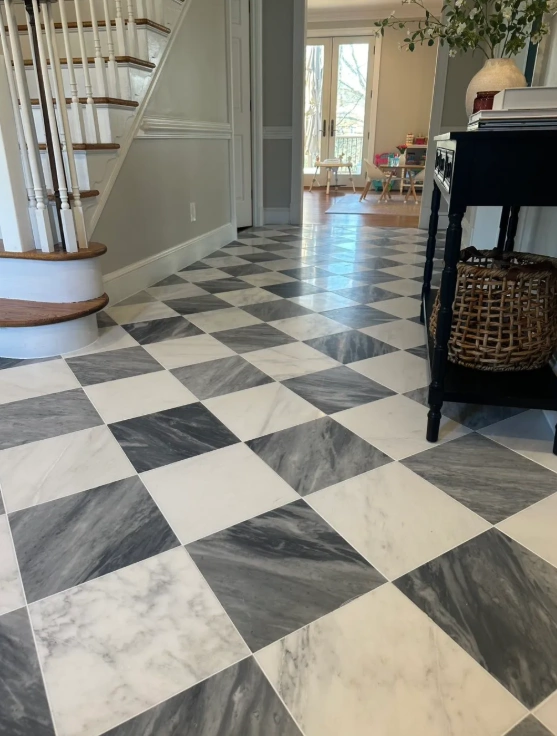
Can you match tile in a repair to an existing floor in a St. Charles home?
It depends on whether the tile is still in production and whether the homeowner has any leftover tile from the original install. Tile lines get discontinued, and even the same product from the same manufacturer can vary in shade between production runs. We'll be straightforward with you about whether a match is close enough to be worth attempting or whether a more visible solution — like a decorative border or a transition strip — would look better.